
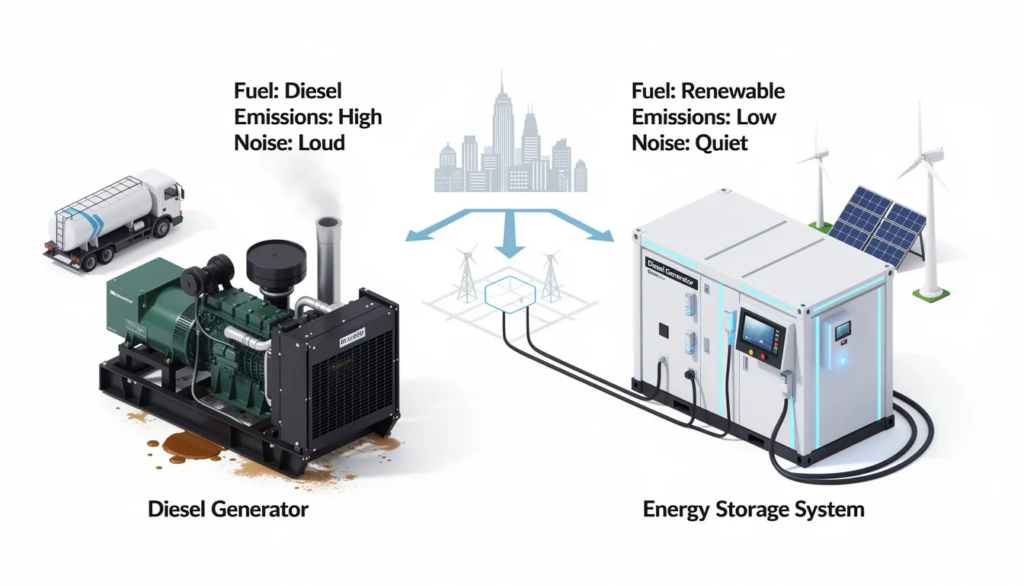
A reliable energy supply is no longer a “nice to have”. For companies, municipalities, and critical infrastructure, electricity is the foundation of operations. When the grid is unstable, power outages stop production, disrupt logistics, and create real safety risks. That’s why many operators are shifting away from diesel backup and moving toward modern energy technologies like battery energy storage systems (BESS).
This transition is happening at the same time as the world accelerates its energy transition. Renewable energy sources are expanding fast, especially solar power, wind power, and new renewable energy technology. But renewables are variable. Without storage, a grid can struggle to balance generation and consumption. Battery storage has become one of the most practical tools to stabilize energy systems and make renewables reliable.
Replacing diesel with battery storage improves stability, lowers cost, and supports climate goals like net zero emissions.
Why replace diesel generators with battery storage?
Diesel generators were built for a world dominated by fossil fuels, where backup power meant burning fuel on-site. But today that model creates problems: fuel logistics, emissions, noise, maintenance, increasing regulatory pressure on traditional fossil fuels, climate change .
By contrast, a BESS creates reliable power without combustion. It stores electrical energy and can deliver electricity instantly.
1) Reliable energy supply with instant response
Diesel generators have startup delays, mechanical risk, and dependency on fuel availability. A battery system responds instantly and improves electricity supply reliability.
A BESS can:
provide immediate backup electricity when the grid fails
keep critical loads stable without interruption
reduce downtime risks for hospitals, factories, and data centers
protect sensitive equipment from voltage instability
This is one of the key reasons storage is now considered core grid infrastructure, not only a backup device.
2) Lower costs and predictable pricing
Diesel backup includes recurring costs: fuel, servicing, inspections, spare parts, refueling. Battery storage reduces those costs dramatically and improves system efficiency.
Battery storage also supports:
load shifting
peak reduction
lower exposure to high electricity pricing
better use of off-peak energy
In short, storage improves financial performance and resilience, especially for high-consumption sites.
3) Cleaner operations and fewer emissions
Diesel generators produce carbon dioxide and air pollution. Battery systems produce zero direct emissions at point of use.
This supports:
clean energy operations
reduced greenhouse gas emissions
lower reliance on conventional fuels
better public acceptance (no noise, no fumes)
Many companies adopt battery storage specifically to cut fossil fuel dependency and align with sustainability requirements.
Storage strengthens renewable energy sources
The global increase in renewable energy is pushing grids toward higher variability. Solar and wind are not dispatchable like a classic power plant. Output changes with weather and time of day.
A BESS solves this by storing electricity when production is high and releasing it when needed. That directly supports both:
renewable energy sources
renewable energy generation
Storage improves system stability by smoothing intermittent production from:
solar panels
photovoltaic panels
solar photovoltaics
solar PV
wind turbines
wind farms
This is why battery storage is often described as the “missing layer” for renewable electricity grids.
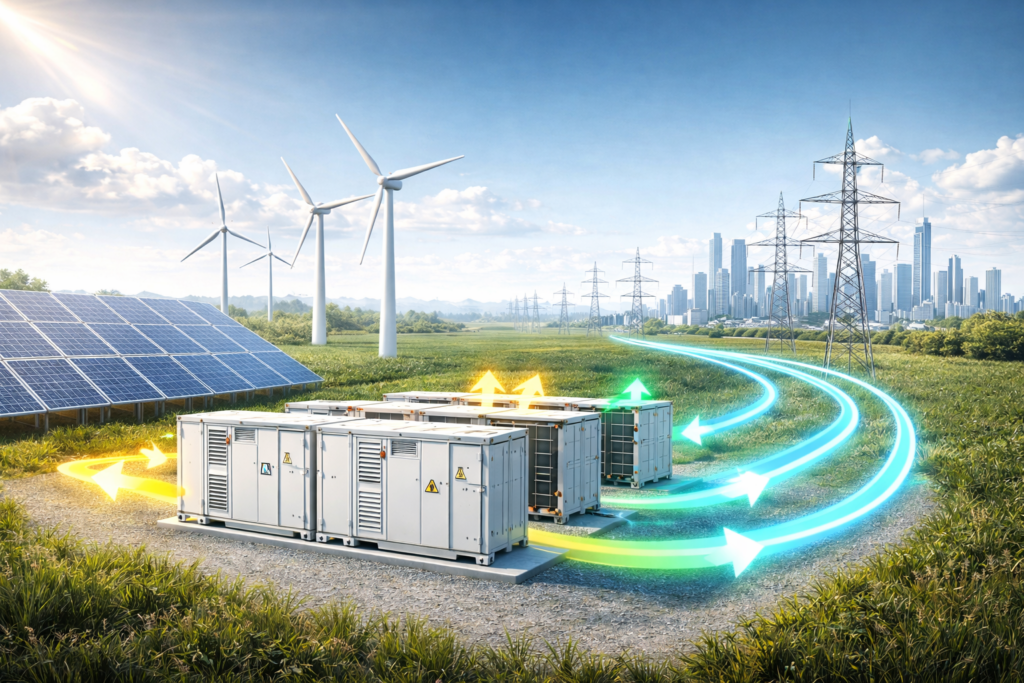
Grid stability and resilient energy systems
Modern energy systems must maintain stability at all times. A stable grid requires balance between:
electricity generation
energy consumption
frequency and voltage stability
Storage provides flexibility that reduces dependency on fossil balancing plants such as natural gas power generation.
A BESS supports the grid through:
fast frequency response
voltage stabilization
reserve capacity
rapid recovery after disturbances
That means fewer blackouts and higher reliability across the electricity sector.
How battery storage fits into the global electricity mix
The world’s electricity mix is changing. Many countries are increasing renewable capacity and reducing fossil generation.
But grids still rely on mixed sources, including:
nuclear energy and nuclear power plants
hydroelectric power
geothermal energy and enhanced geothermal systems
solar and wind
natural gas
legacy fossil plants
Battery storage improves the system by enabling grids to:
store excess renewable electricity
reduce curtailment
reduce fossil backup requirements
manage demand peaks
That makes storage a strategic tool across both developed countries and developing countries.
Battery storage system design: what matters
A BESS is not a “box of batteries”. It is a full engineered system.
A high-quality battery storage system design includes:
battery modules and thermal management
monitoring and safety controls
power conversion systems
protection systems (overcurrent, faults)
integration with the grid and energy management logic
Choosing battery technology
Most modern systems use lithium-ion chemistry for high energy density and efficiency, but depending on use case, different energy technologies can fit.
Common options include:
lithium-ion
lithium iron phosphate (LFP)
lead-acid (legacy)
flow batteries (long duration)
The best choice depends on the site, energy supply structure, required runtime, and operating profile.
Storage reduces dependence on fossil fuels
Battery storage helps reduce fossil fuels in two ways:
it replaces diesel generators directly
it reduces grid reliance on gas peaker plants
That shifts the system away from high-emission backup solutions, supporting long-term decarbonization of energy production.
The result:
less carbon dioxide
less air pollution
fewer fossil fuels required for reliability
better path toward net zero emissions
Why this matters for the future
The global energy consumption trend is clear: electrification is increasing, and energy demand is rising across industry, mobility, and digital infrastructure.
That means the grid must:
generate electricity reliably
deliver stable power under variable renewable generation
maintain reliability without expanding fossil backup
Battery storage is one of the strongest tools to achieve that.
Conclusion: battery storage is the new baseline for reliability and future of clean energy
A reliable energy supply depends on flexibility. In modern power systems, flexibility comes from storage.
Replacing diesel generators with a battery energy storage system delivers:
instant and reliable electricity supply
lower operating costs
reduced greenhouse gas emissions
improved grid stability
stronger integration of renewable energy sources
long-term resilience for the electricity sector
If the goal is a stable energy supply in a renewable-heavy grid, battery storage is not optional anymore. It’s infrastructure.
Related Products from Aema ESS
Explore Aema ESS energy storage solutions for backup power, grid support, and renewable energy integration.
Featured systems:
Contact us today to receive a tailored offer for your upcoming project.