

In late April (year 2025), a major grid event triggered a widespread power outage across Spain and some locations in Portugal. Public transit stopped, flights were disrupted, and many customers lost access to essential services. Hospitals had to switch to backup diesel generators to keep critical equipment running, which highlighted how fragile modern grids can be during a large-scale outage.
This energy blackout did not happen because renewables exist. It happened because the system lacked enough flexibility to absorb shocks from variable generation and transmission stress. When renewable output changes fast and grid constraints pile up, one fault can cascade into a regional outage.
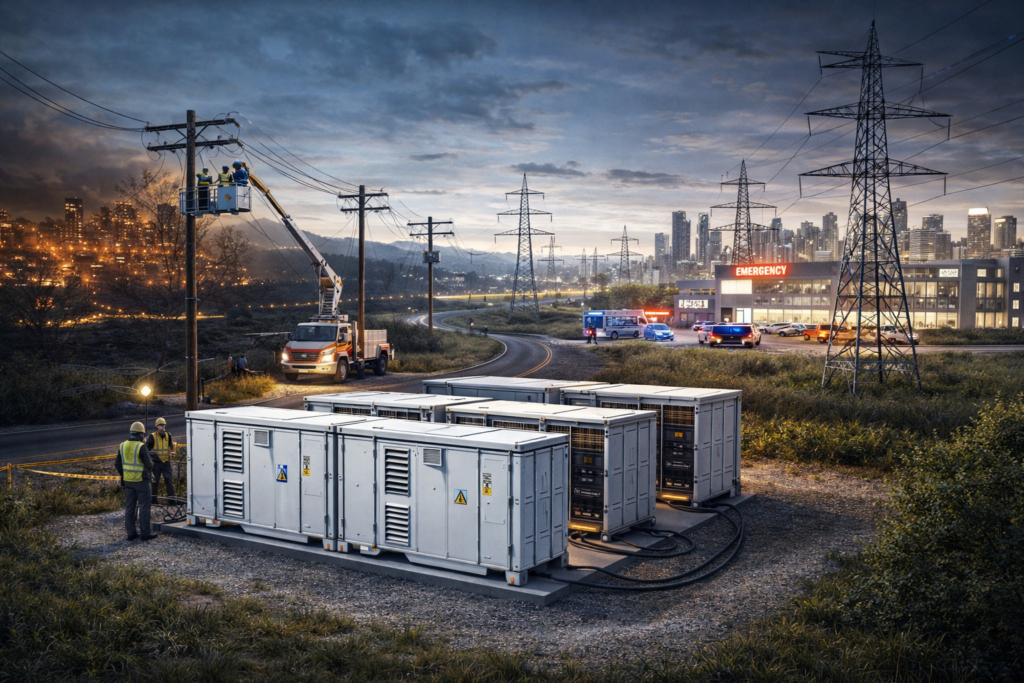
A strategically deployed Energy Storage System (ESS) network could have reduced the outage impact by supplying stored electricity locally, stabilizing frequency, and keeping critical loads online.
What caused the Spain outage?
Large outages usually come from a chain reaction, not one single issue. During this event, the grid experienced instability while generation and transmission were under stress.
Common causes of regional outage include:
sudden drops in generation
overloaded grid corridors
insufficient flexibility during fast changes
limited stored energy available near load centers
slow recovery after a fault event
Once the grid entered an unstable state, the outage spread quickly across regions and became a national disruption.
How ESS limits blackout impact and stabilizes the grid
Energy storage works as a distributed buffer. It stores electricity during normal operation and releases it instantly during disturbances. That means critical sites can keep operating, and the grid can stabilize before failures cascade.
1) Support critical loads with instant backup electricity
During the Spain outage, many hospitals depended on diesel backup, which creates delays, emissions, and fuel logistics risk.
An ESS network would provide clean, instant backup electricity for:
hospitals and emergency centers
communication networks
data centers
critical municipal services
Because storage can supply electricity immediately, it protects critical loads without waiting for generator start-up and without relying on fuel delivery.
2) Balance supply and demand during power outages
A large power outage expands when supply and demand cannot be balanced quickly enough.
ESS can:
store electricity during low demand
release electricity during peak demand
reduce sudden grid stress
support smoother load balancing
That balancing keeps the system stable and reduces the risk of overloads that turn local faults into nationwide outages.
3) Frequency regulation to prevent cascading failures
Battery storage responds in milliseconds. That speed is essential in fault scenarios, because frequency instability is what drives cascading grid collapse.
With ESS, the grid can stabilize faster by injecting electricity during sudden events and reducing the chance of a chain reaction across multiple areas.
Outage map, outage alerts, and why they matter
During a major outage, information becomes operational infrastructure. Utilities rely on visibility tools to determine the affected location, dispatch crews, and restore service safely.
Strong systems include:
an outage map to view impacted areas
live updates and status information
restoration estimates and safety messages
Outage alerts help customers prepare and stay safe. A good outage map helps utilities determine where restoration should begin. It also helps crews prioritise hospitals, telecom sites, and other critical facilities first.

What utilities must do: updates and restoration flow
Restoring service during a major outage is a structured process. Utilities must:
isolate unstable grid zones
restore power step by step
send frequent updates as conditions change
Customers should continue to monitor outage maps and updates, and use official channels to find accurate information instead of rumors.
Conclusion: storage reduces outage severity
When flexibility lags behind renewable growth, energy storage does not replace the grid. It stabilizes it.
With ESS deployed across the network:
outages shrink instead of spreading
critical facilities maintain service
customers get better stability and safer restoration
crews can restore the grid faster with less chaos
Energy storage is now a grid infrastructure. It is one of the most practical tools available to reduce blackout risk and improve stability across the power system.
Related Products from Aema ESS
Explore Aema ESS energy storage solutions for backup power, grid support, and renewable energy integration.
Featured systems:
Contact us today to receive a tailored offer for your upcoming project.