
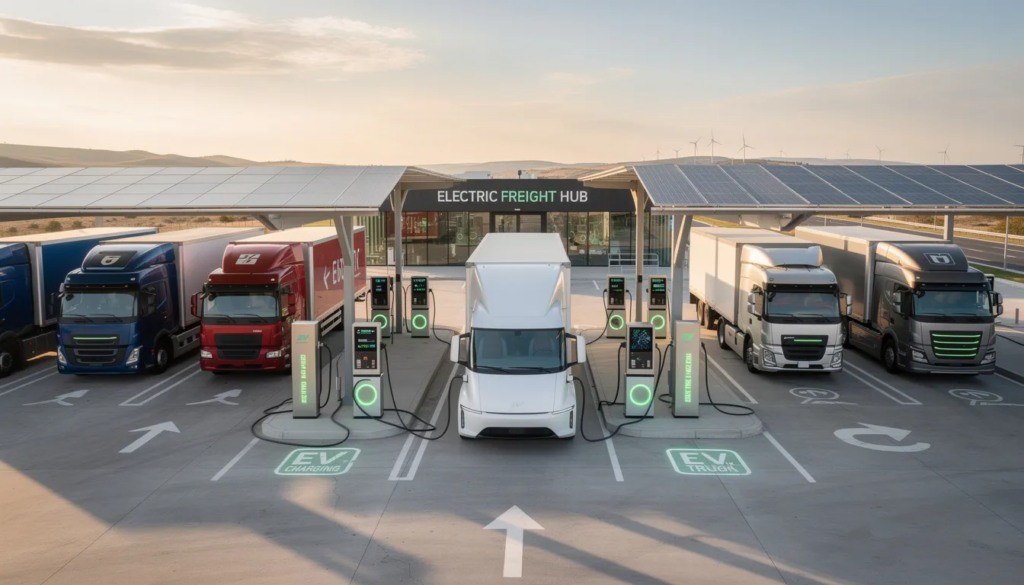
The need to rise the total number of mobile EV charging
In freight transportation, downtime is money. As electric vehicle fleets scale across Europe, one bottleneck keeps showing up in every report: charging stations are still not built for heavy-duty logistics. An EV truck cannot plan its route like a passenger vehicle. It must follow legal driver rest rules, manage payload schedules, and still secure a reliable charge window.
That is why the next generation of charging stations is not only about plugs and power. It is about storage-backed charging infrastructure that aligns electric vehicle charging with driver breaks, grid constraints, and route efficiency.
Energy Storage Systems (ESS) are the missing layer that makes EV charging stations predictable for logistics.
Why fast mobile charging stations matter for electric vehicle freight
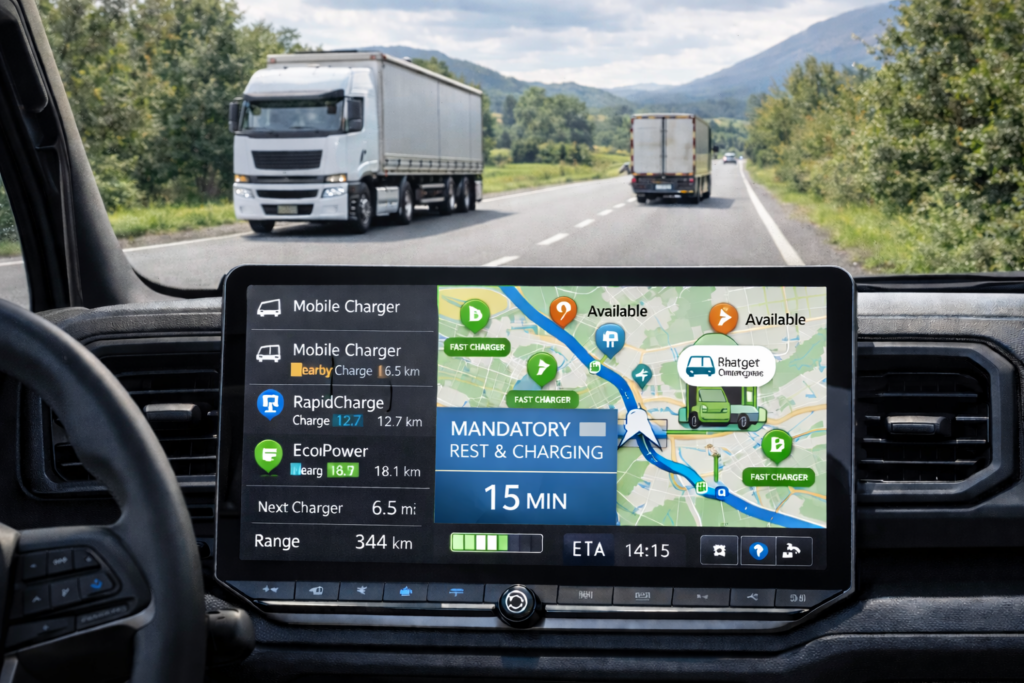
Every electric vehicle truck operator faces the same constraint: drivers must stop for mandatory breaks and are dependant on other networks. If the truck reaches charging stations that can not deliver fast and stable electric vehicle charging or is far away from the root, the fleet loses time. The risk is not only queueing. It is uncertainty.
For long-haul transportation, route planning depends on:
available charging stations
reliability of station equipment
connector types
charging pricing
network access and charging networks
station availability shown by a station locator or route app
This is why the logistics market is pushing for a serious build-out of mobile charging infrastructure: the total number of stations must grow, but quality must grow too.
EV adoption: charging stations match driver rest schedules and root
A truck driver does not stop “when convenient”. Stops are regulated. That means EV charging stations should be designed around rest cycles, not around random passenger-car traffic.
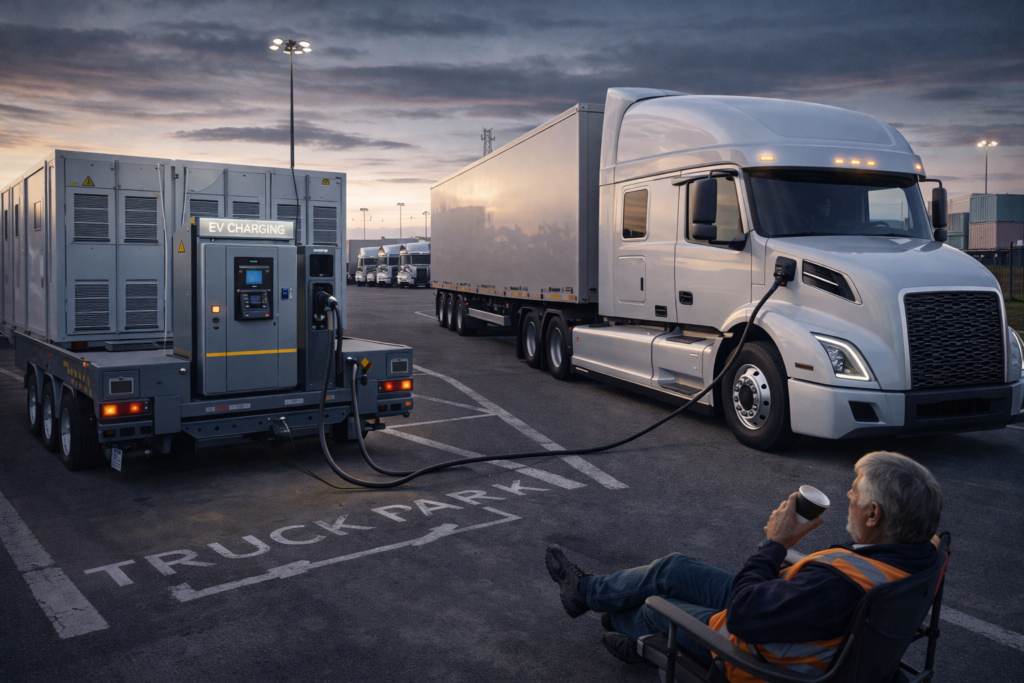
If the route is planned correctly, electric vehicle charging happens while the driver rests, and the vehicle returns to the road fully ready. When EV charging stations fail to match those cycles, fleets lose productivity and are forced into detours.
The difference between average and optimized logistics is often a single thing: predictable charge delivery at the right location.
How ESS upgrades into predictable charging infrastructure
Without storage, EV charging stations depend fully on grid capacity and local peaks. With ESS, charging stations can store energy in advance, then release power instantly when trucks arrive.
That changes the game for electric vehicle charging.
ESS-backed charging stations allow operators to:
prepare energy before arrival
deliver consistent fast charging
reduce load spikes
maintain stable power output
operate reliably even when grid access is limited
In practice, ESS converts a fragile site into industrial-grade charging infrastructure.
Key benefits of ESS-enabled charging stations for EV trucks
1) Route efficiency and reduced downtime
The fastest way to kill EV fleet productivity is wasted time at charging stations. With ESS, fleets avoid:
waiting for power allocation
unstable charge speeds
detours caused by unavailable stations
Instead of hunting for available chargers, operators plan direct stops at ESS-backed charging stations.
2) Compliance and safer driver workflow
Driver compliance becomes easier when electric vehicle charging is aligned with breaks. Quiet operation, no fumes, no engine idling. Better rest. Better safety.
The driver uses the same rest window, but the vehicle completes its charge cycle in parallel.
3) Strategic locations on highways and freight corridors
EV freight needs charging stations in logistics-first locations:
highways
freight terminals
industrial corridors
ports
distribution hubs
These are planned network locations where stations reduce route distance and keep a vehicle schedule stable.
A map-based station locator app helps logistics managers pick the correct locations and avoid dead zones.
4) Scalability without grid overload
As EV adoption accelerates, the grid cannot simply expand overnight. ESS allows charging stations to scale while protecting the network.
Storage-backed charging infrastructure reduces grid stress during peak demand and maintains stable electric vehicle charging even when multiple vehicles arrive in the same window.
Charging networks, access and interoperability
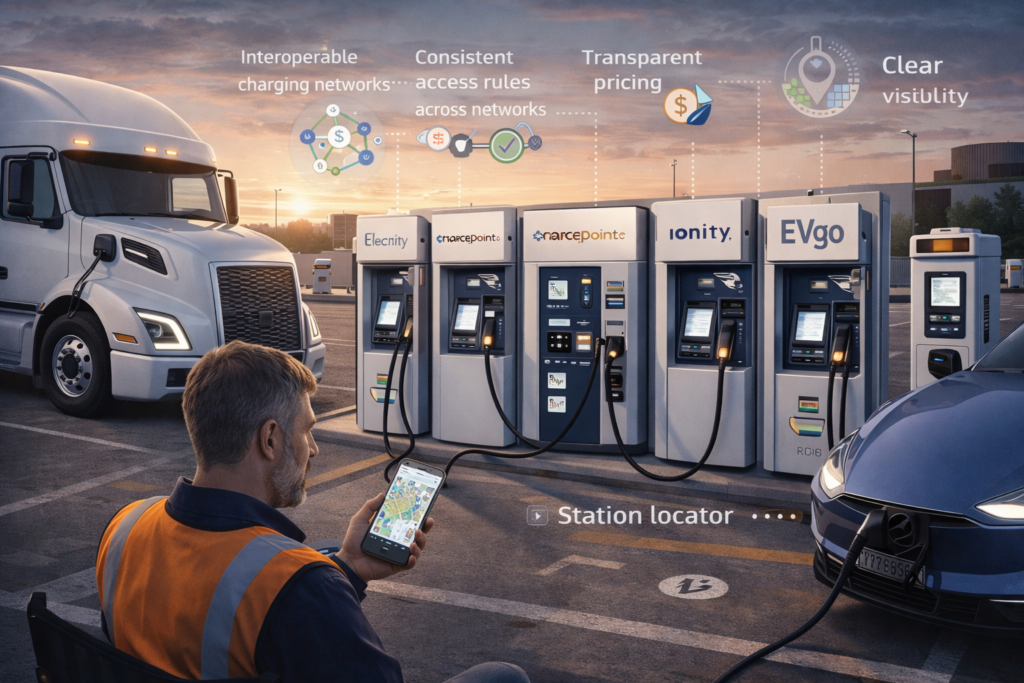
The real-world experience of drivers depends on networks. A strong system means:
interoperable charging networks
consistent access rules across networks
transparent pricing
ability to start a session quickly
clear visibility in a station locator
For fleets, interoperability reduces friction and improves planning. EV charging stations must fit into multiple networks, not only one brand ecosystem.
Charging station equipment: what matters for electric vehicle charging
Heavy-duty electric vehicle charging demands high-performance equipment, built for constant operation.
A complete charging station includes:
high-power chargers
rugged charging connector systems
compatible connector types
control devices that monitor load and safety
secure payment flow (pay options)
systems to maintain uptime
Even the smallest weakness in connector hardware affects fleet performance because every truck stop is scheduled.
Connector types and plugs
Connector types must fit commercial standards, and fleets need confidence that the correct plugs are available. Poor connector management creates operational delays at charging stations.
A strong charging site clearly displays connector types, cable condition, and live station status in the station locator.
Station locator apps: the real operational layer
The most important digital tool for freight EV is not marketing. It is a station locator.
A station locator must show:
available charging stations
real-time status of stations
working chargers vs blocked chargers
connector types
expected charge time
network access
Drivers rely on it the same way aviation relies on air traffic systems. Without a reliable station locator, electric vehicle logistics becomes chaos.
Many fleets integrate station locator tools into route navigation with Android Auto and Apple CarPlay so drivers can find EV charging stations without manual search or browser detours.
Grid management: balancing power, load and pricing
EV fleets create concentrated demand. Grid operators must balance supply, especially near highways.
This is where ESS becomes essential to charging station economics:
ESS stores energy off-peak
reduces high pricing exposure
smooths grid load
protects local transformers
A storage-backed site improves overall charging infrastructure stability and lowers risk for operators.
Security and safety in charging stations
EV charging sites are physical infrastructure. That means safety and reliability systems matter:
access control
surveillance and monitoring
fault detection
safe shutoff
maintenance procedures
Operators must maintain equipment quality and keep chargers functional. Broken chargers reduce the total number of usable stations and kill fleet trust.
Market signals: Europe and the global transition
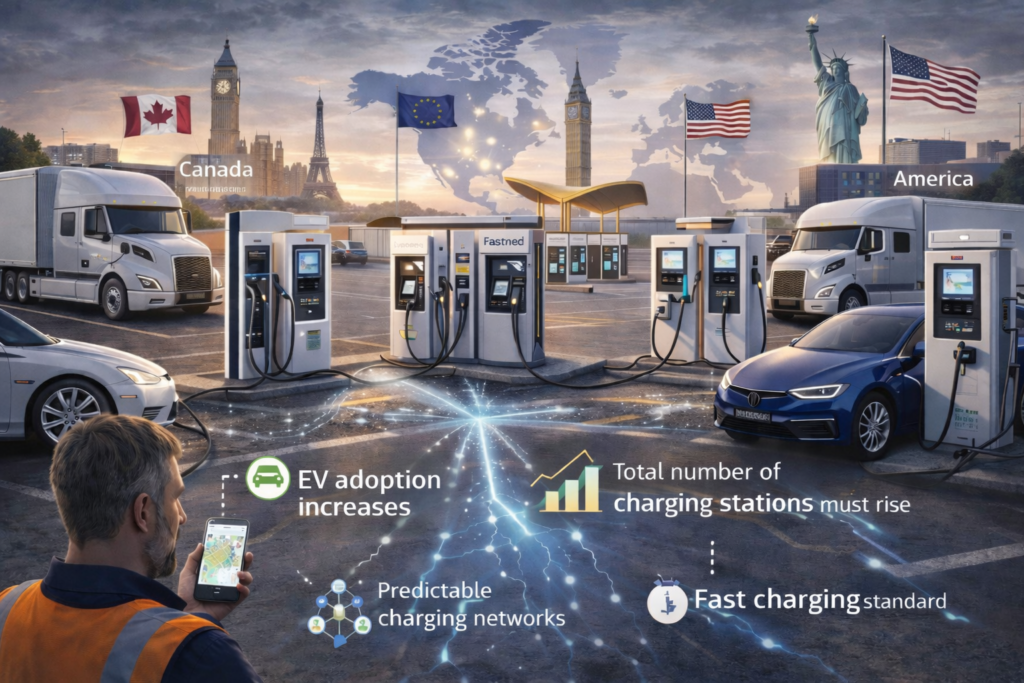
Europe is pushing EV infrastructure, but the same logic applies globally within the transportation sector. Canada and America are scaling EV corridors, while European corridors remain a benchmark for regulated transportation routes.
Across markets, the pattern is clear:
EV adoption increases
fleets demand predictable charging networks
total number of charging stations must rise
fast charging must become standard
The next stage is not only building stations. It is building systems.
Conclusion: charging stations become logistics infrastructure, not convenience points
Charging stations for EV trucks are no longer optional. They are becoming essential infrastructure for modern freight transportation.
When EV charging stations are combined with ESS:
electric vehicle charging becomes predictable and mobile
drivers follow rest rules without losing productivity
charging infrastructure scales without grid collapse
charging networks become reliable tools for business
This is how fleets win the transition: not by searching for charging stations, but by deploying mobile charging stations that deliver guaranteed fast charge, every time the driver takes a rest.
Related Products from Aema ESS
Explore Aema ESS energy storage solutions for backup power, grid support, and renewable energy integration.
Featured systems:
Contact us today to receive a tailored offer for your upcoming project.