
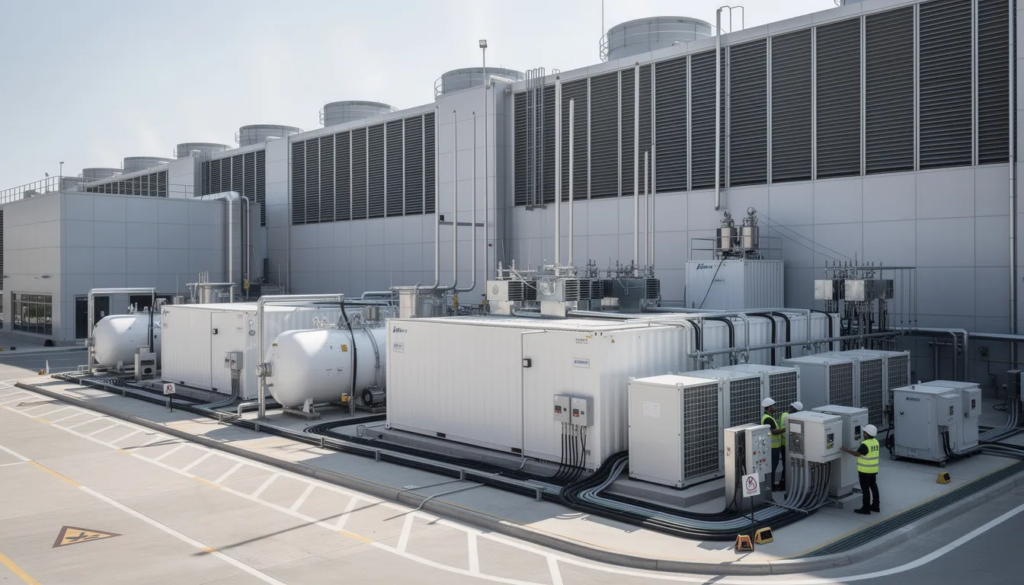
Battery storage as a new direction
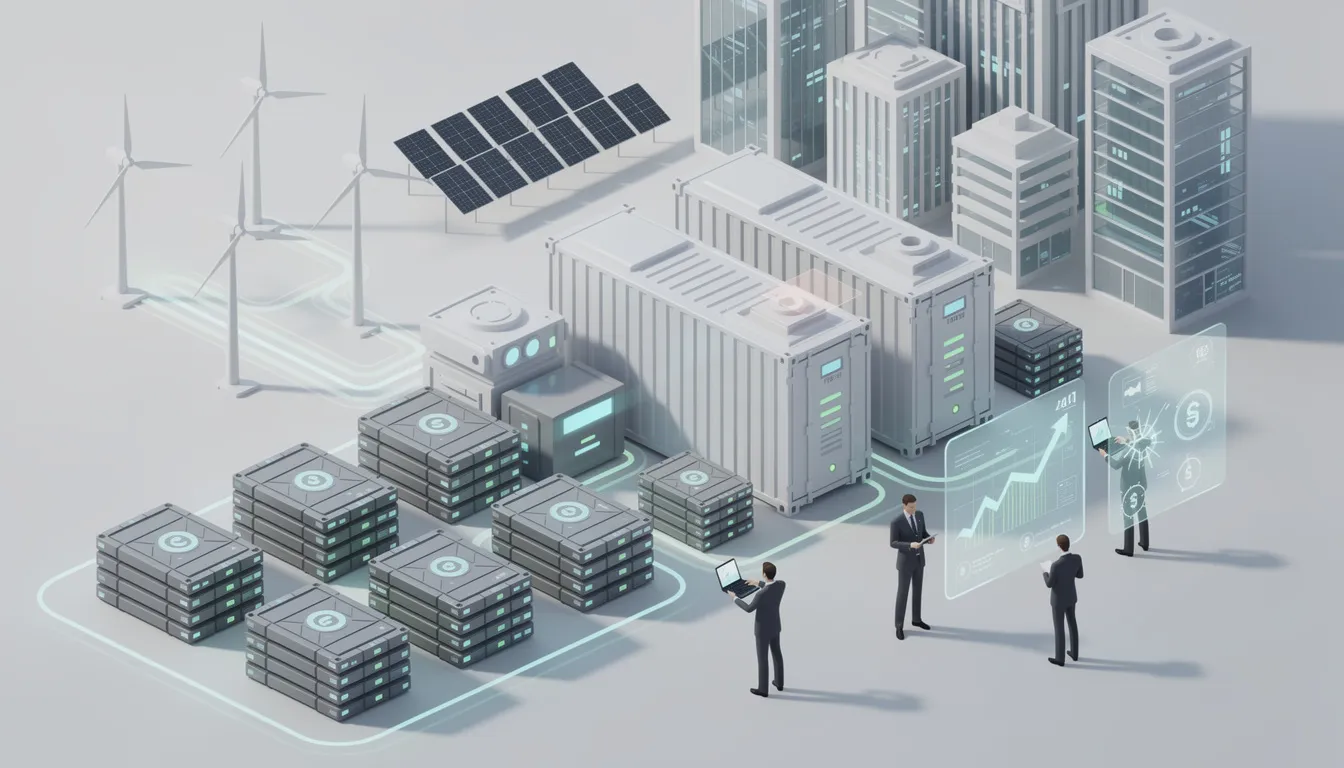
BESS implementation is no longer a pilot concept. It is now the direction of next-generation critical infrastructure, and Microsoft has made that shift official in Sweden by replacing diesel-powered generators with a large-scale battery energy storage system (BESS) supplied by Saft, a TotalEnergies subsidiary.
For modern data centers, backup power is not optional. It is part of the data center infrastructure that ensures stable electricity supply for sensitive workloads, enterprise services, and business operations. In this context, diesel generators are not “reliability” anymore, they are legacy risk. Microsoft’s move proves that battery energy storage systems can provide the same operational resilience while reducing dependence on fossil fuels.
Why BESS implementation matters for modern data centers
Modern data centers, hyperscale facilities, and AI infrastructure demand system reliability under all conditions, including grid instability and power outages. Traditional diesel backup creates an operational chain that relies on fuel logistics, maintenance, and permitting complexity.
A well-designed utility scale battery energy storage system can:
Deliver instant backup power
Improve grid stability
Reduce downtime risk
Support safer and more efficient operations via control systems
Reduce energy costs (store power when it’s cheap and use when it’s a peak demand)
Support solar panels/wind turbines generation
In other words: BESS implementation is the new baseline for resilient infrastructure.
Microsoft’s BESS implementation in Sweden Central: what changed
When Microsoft launched its Sweden Central region in late 2021, the data center sites in Gävle, Sandviken, and Staffanstorp still relied on diesel generators. That decision quickly triggered criticism in Sweden, where diesel is increasingly viewed as incompatible with climate targets.
Microsoft previously tried to soften the impact by switching part of its diesel supply to a higher-renewable-content fuel, but it was still diesel. Now Microsoft has moved from compromise to replacement.
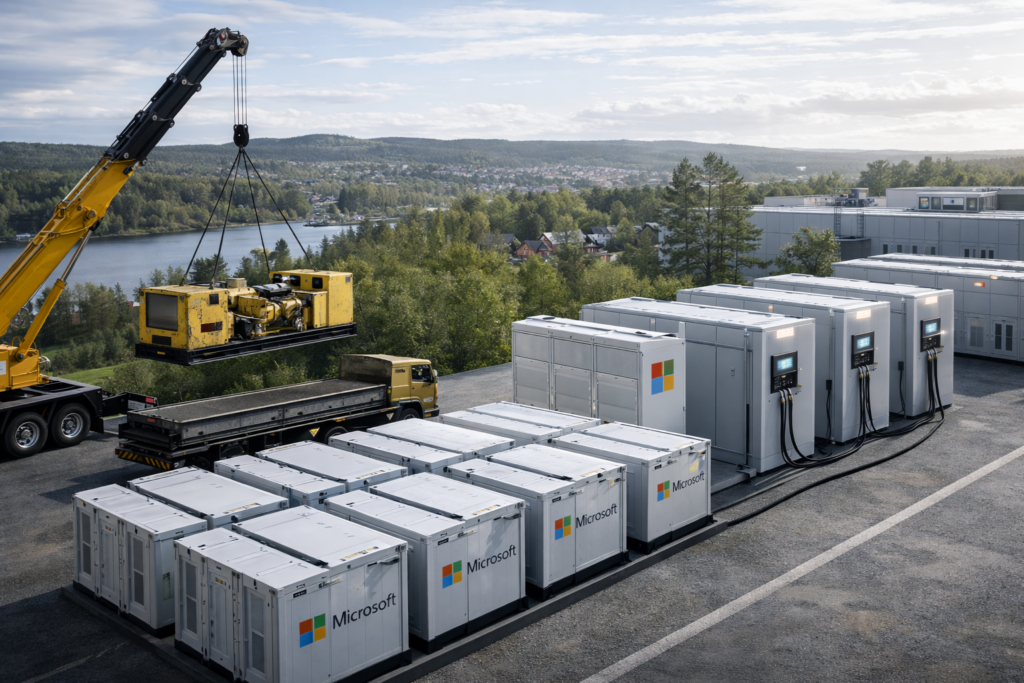
Battery energy storage system specifications: 16 MWh storage capacity and high-power backup output
The BESS unit delivered in June provides:
16 MWh of total storage capacity
Up to 12 MW power output (configured as four 4 MWh battery groups, each delivering up to 3 MW)
Around 80 minutes of runtime supporting critical systems
This runtime window matters because it covers the highest-risk period of most grid outages. It enables seamless bridging until grid recovery or controlled shutdown, exactly the purpose diesel generators have historically served, but with fewer mechanical failure points.
How BESS improves grid stability and reliability
A battery system is not only storage. It also actively supports the power grid.
BESS implementation can provide:
frequency response
fast reserve / ancillary services
voltage support
stability during grid faults
This is why battery energy storage is being adopted at utility scale, even beyond data centers. Where diesel gives power after startup delay, BESS gives rapid response instantly.
Why diesel generators are being phased out
Diesel backup remains as a key component in data center design because it can run for long periods. But its disadvantages are now too expensive:
fuel supply dependency
emissions and permitting issues
reputational risk in Europe
mechanical failure exposure
compliance pressure
For hyperscale operators, diesel is no longer an engineering decision — it’s a political and economic liability.
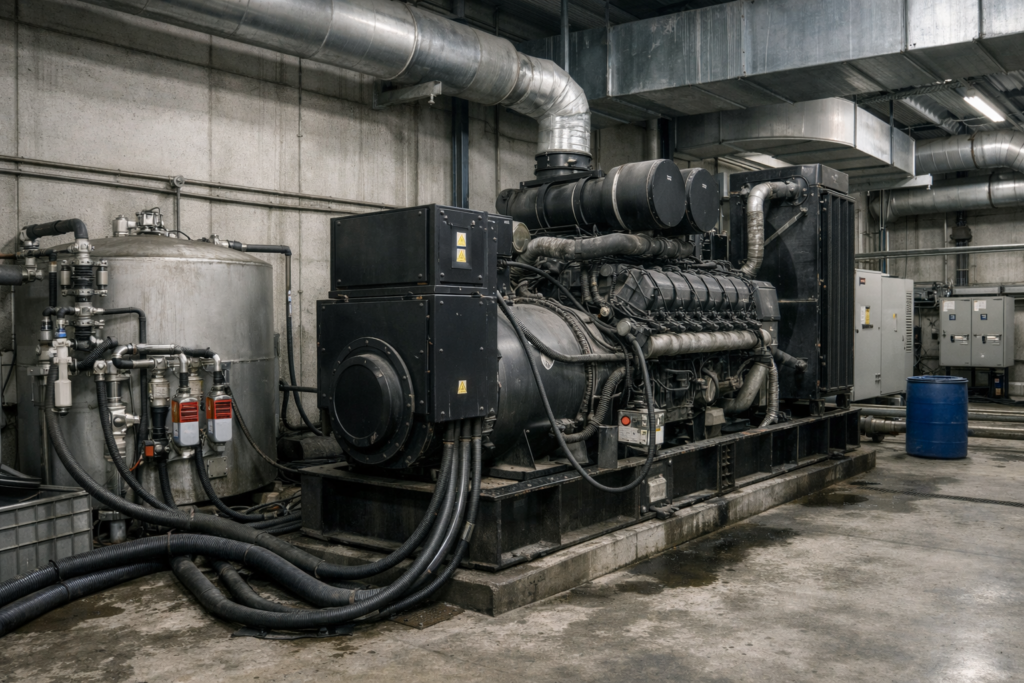
How BESS implementation supports renewable energy integration
Even though Microsoft’s case is “backup power”, it sits inside a bigger trend: renewable energy integration.
Energy storage helps:
reduce peak demand pressure
balance energy supply
store excess electricity from renewables and renewable energy sources
support grid flexibility under variable generation from renewable energy sources
This is why BESS is now a key enabler of modern power systems. It allows grids to use more wind and solar from renewable energy sources without destabilising the network and supports renewable energy generation stability.
In other words: the system must not only provide backup power. It must survive worst-case events safely, because a failure inside data center infrastructure is catastrophic.
Beyond lithium-ion: what future BESS projects may use
Lithium-ion dominates today, but new chemistries are being explored, including:
lithium iron phosphate (LFP) for improved safety
sodium-ion for cost reduction and supply resilience
flow batteries for longer-duration storage
Sodium-ion batteries have lower energy density, but that matters less in large storage facilities, especially at utility scale.
Conclusion: BESS implementation is the new standard for resilient data center infrastructure
Microsoft’s Swedish deployment is more than a single project. It signals a structural shift:
diesel generators are no longer the default backup
battery energy storage systems are becoming mainstream
sustainability and reliability are merging into one strategy
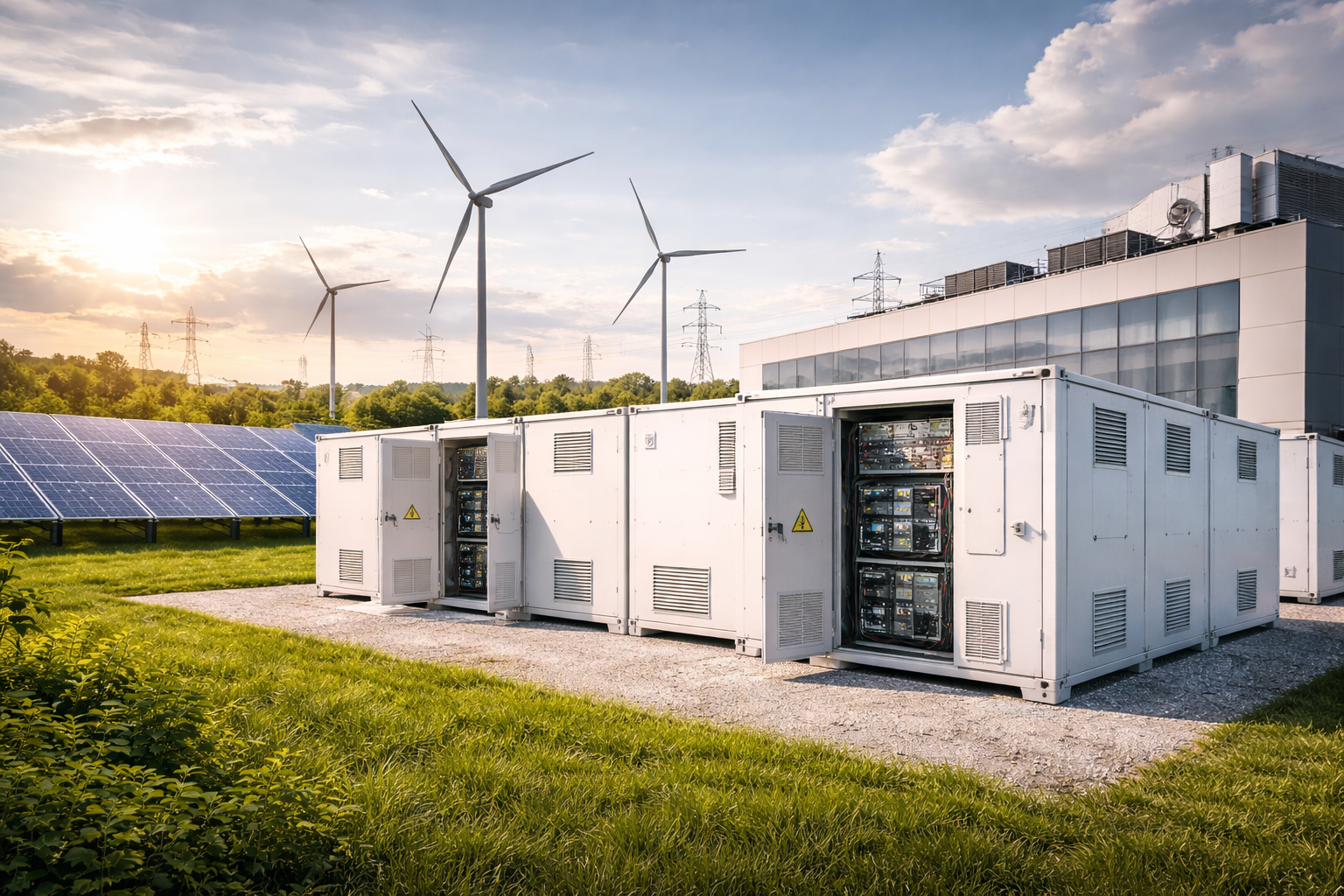
Related Products from Aema ESS
Explore Aema ESS energy storage solutions for backup power, grid support, and renewable energy integration.
Featured systems:
Contact us today to receive a tailored offer for your upcoming project.