
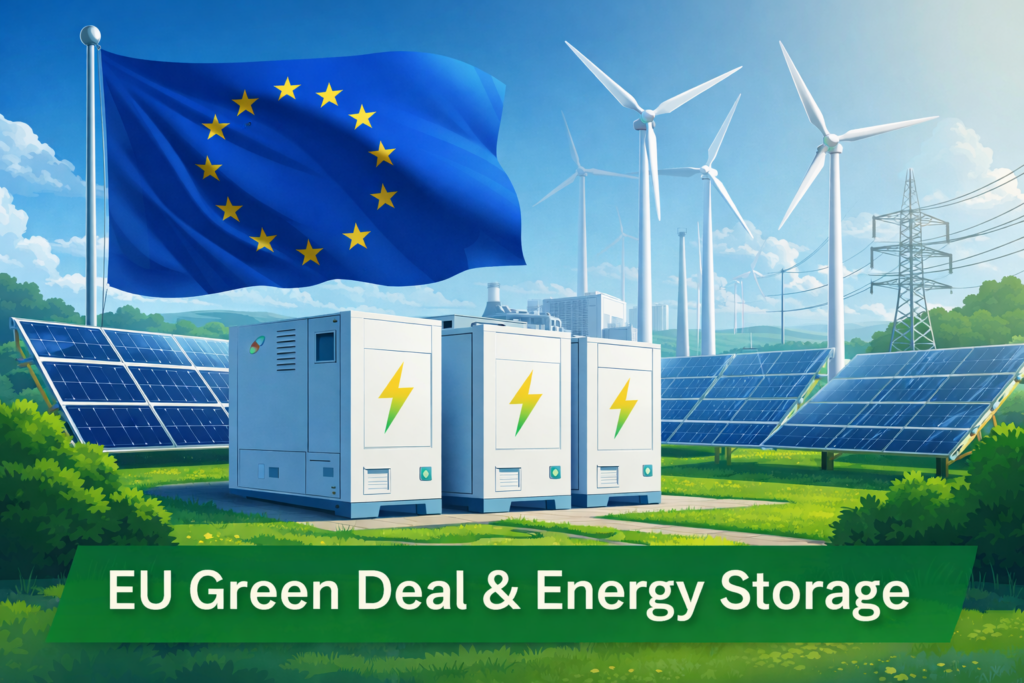
EU Green Deal: Why Energy Storage Is Becoming Europe’s New Infrastructure
The EU Green Deal is no longer only about targets on paper. It is turning into a practical infrastructure program where energy storage becomes one of the key tools for grid reliability, energy efficiency, and climate neutrality. The European Commission is preparing to launch its Energy Storage Package in Q4 2025, aiming to remove the regulatory and market barriers that have slowed down energy storage systems across EU member states.
This shift matters because Europe’s energy transition is already deep into execution mode. Under the European Green Deal, the European Union pushed aggressive renewable energy deployment, circular economy policy, and greenhouse gas emissions reduction. But the more renewable energy enters the energy system, the more volatility it introduces. Clean energy without energy storage is just instability.
That’s why the European Commission is moving energy storage from “nice to have” to “system requirement”.
The EU Green Deal agenda is now tied to grid stability, grid reliability, and the ability to store energy at scale. Europe can add wind power and solar generation all day long, but without storage technologies that can shift stored energy across hours and days, the system remains fragile. That fragility translates into higher electricity costs, lower power quality, and more exposure to fossil fuels.
In short: the EU Green Deal can only work if energy storage systems become a foundation of the European energy system.
European union: Why the EU Green Deal Needs Energy Storage
The EU Green Deal has one dominant direction: become the first climate neutral continent and reduce greenhouse gas emissions while maintaining economic growth. The policy stack includes the European Climate Law, industrial strategy, and sustainable investments designed to reduce carbon emissions and modernise infrastructure across EU countries.
But the deeper Europe goes into renewable energy sources, the more it depends on flexibility.
Renewable energy volatility is the new grid risk
Renewable energy sources such as solar and wind are variable. Wind speed changes. Solar output drops to zero every night. That means the electricity supply becomes less predictable. The energy system needs balancing mechanisms to maintain system reliability and power quality.
Historically, Europe used fossil fuels (especially natural gas) as the “flexibility tool.” But the EU Green Deal targets require fossil fuels to shrink, not expand. That creates a gap, and energy storage fills it.
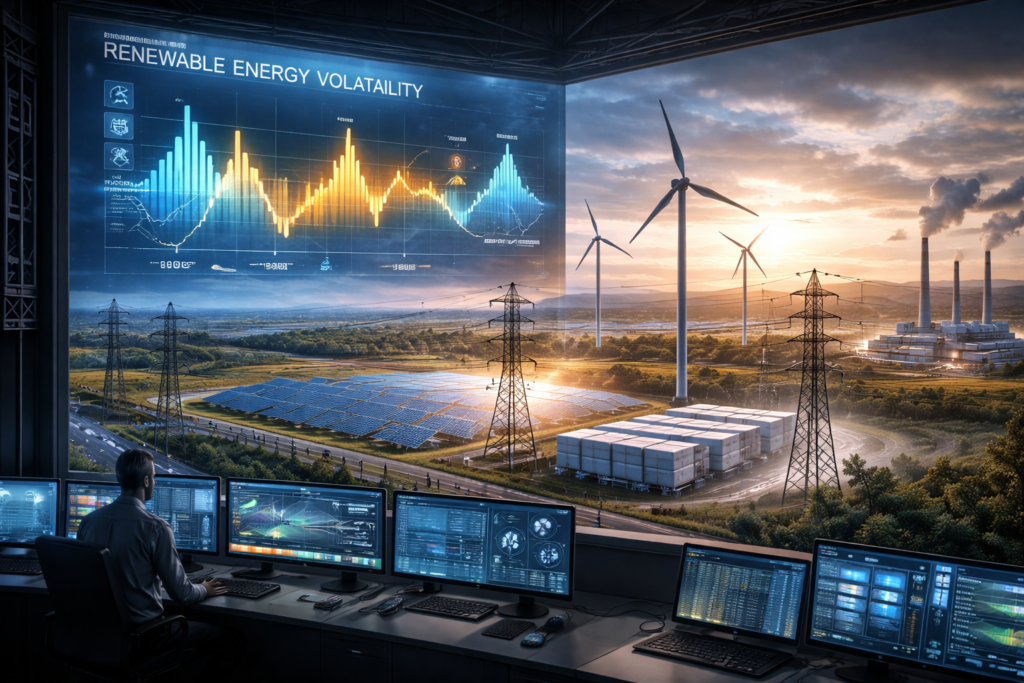
Energy storage turns renewable energy into usable power
Energy storage technologies allow operators to store energy when renewable generation is high and release stored energy during peak hours when demand rises. This helps:
balance energy demand
reduce power fluctuations
improve overall system efficiency
lower electricity costs
support grid reliability during higher demand periods
So the EU Green Deal is effectively becoming an energy storage roadmap.
What the European Commission Energy Storage Package Will Change
The European Commission will launch the Energy Storage Package in Q4 2025 as part of a broader effort to reinforce the European power grid, accelerate renewable energy integration, and support climate neutrality. The goal is to stop treating storage as “optional” and instead treat it as critical infrastructure for the European Union energy system.
The package aims to eliminate barriers slowing energy storage projects across member states by focusing on four pillars:
1) Fast-track permitting and regulatory approvals
Permitting is one of the biggest brakes on energy storage systems. Today, a battery project can wait months or years for approvals, even though storage capacity is urgently needed for grid stability.
Streamlining approvals allows:
faster deployment of energy storage systems
better integration of renewable energy
reduction of fossil fuels during peak demand
2) Prioritise grid upgrades and market participation
Energy storage only creates value when it participates fully in the energy market. That requires grid upgrades, smart grids, and market rules that recognise storage technologies (not treat them as “generation” or “consumption” only).
Electricity storage is vital for the electric grid because it provides flexibility. Grid-scale energy storage projects help stabilise frequency regulation and improve system reliability.
3) Mandate national long-duration storage strategies
The European Commission wants member states to define long-duration energy storage strategies aligned with climate neutrality goals.
Why? Because short duration storage is not enough for seasonal balancing. Europe needs:
daily shifting (hours)
multi-day shifting (days)
longer storage technologies (days/weeks)
That pushes development of various storage technologies including pumped hydro storage, thermal energy storage, compressed air energy storage, and emerging hybrid energy storage systems.
4) Align cross-border rules for energy flow
Cross-border energy flow is one of the European Union’s key advantages. But storage flexibility across borders is still limited by fragmented rules. Aligning cross-border regulation improves:
energy supply resilience
electricity storage market efficiency
grid stability in EU countries
EU Green Deal Momentum: Why This Happens Now
This policy shift comes at the right moment because Europe’s EU Green Deal progress is strong, but fragile without energy storage.
Emissions and infrastructure signals
The EU has already achieved major greenhouse gas emissions reduction progress.
More renewable energy capacity was added rapidly in 2022–2024.
Avoiding fossil fuel imports saved massive amounts during the energy crisis.
But the next stage requires energy storage systems at scale — not “pilot projects”, but infrastructure rollout.
Energy storage is an enabling technology. It makes renewable energy usable. Without energy storage capacity, Europe gets volatility, not climate neutrality.
The European Green Deal Context: Energy Storage as a System Upgrade
The European Green Deal is not one policy — it is a system transformation.
It intersects with:
European Climate Law (binding climate neutrality trajectory)
Circular Economy Action Plan (resource efficiency + recycling)
Industrial strategy (competitiveness + local supply chains)
Sustainable Europe Investment Plan (funding + sustainable finance tools)
“Just Transition Mechanism” (social impact balancing)
sectoral strategies like Farm to Fork strategy
Energy storage sits right in the middle because it is the infrastructure tool connecting climate action with real energy system performance.
Energy Storage Technologies Europe Will Depend On
The Energy Storage Package will not focus only on lithium batteries. The European Commission is looking at energy storage technologies as a broad set of solutions.
Battery energy storage systems (BESS)
Battery energy storage is still the fastest option to deploy. Lithium ion battery systems scale quickly and provide rapid response for frequency regulation, peak shaving, and grid reliability.
BESS is the default technology for:
storage capacity up to several hours
grid services
rapid response requirements
Pumped hydro storage
Pumped hydro storage remains the largest electricity storage method in the world. In Europe, pumped hydro storage has the advantage of large capacity, but it is geographically limited.
Still, pumped hydro storage is critical for:
long-duration storage
stabilising the energy system
managing stored energy at large scale
Thermal energy storage
Thermal energy storage (TES) stores energy in heat. Thermal storage works well for industrial processes and district heating. It can support renewable energy integration by shifting energy consumption.
Thermal energy storage is growing due to:
energy efficiency
industrial decarbonisation
cost effectiveness
Compressed air energy storage
Compressed air energy storage uses surplus energy to compress air for later electricity generation. It can provide large-scale energy storage capacity, but requires suitable geology.
Fuel cells and hydrogen-linked storage
Fuel cells convert stored chemical energy into electricity. Hydrogen storage becomes relevant in long-duration and seasonal balancing.
Emerging storage technologies
The European Union is also monitoring:
flow batteries
superconducting magnetic energy storage
hybrid energy storage systems
next-generation lithium ion battery chemistries
The point: energy storage systems will not be one technology — Europe needs a stack of storage systems.
Grid Reliability: Why Energy Storage Is Becoming Mandatory
The EU Green Deal is now linked to grid reliability. The grid must operate with power fluctuations, renewable intermittency, and higher demand from electrification.
Energy storage systems support:
reliable power supply
power quality
stable frequency regulation
balancing energy demand and energy consumption
In a renewable-heavy grid, energy storage becomes as important as transmission lines. It is a grid asset, not only a project investment.
Circular Economy and Sustainability: Energy Storage Under EU Green Deal Rules
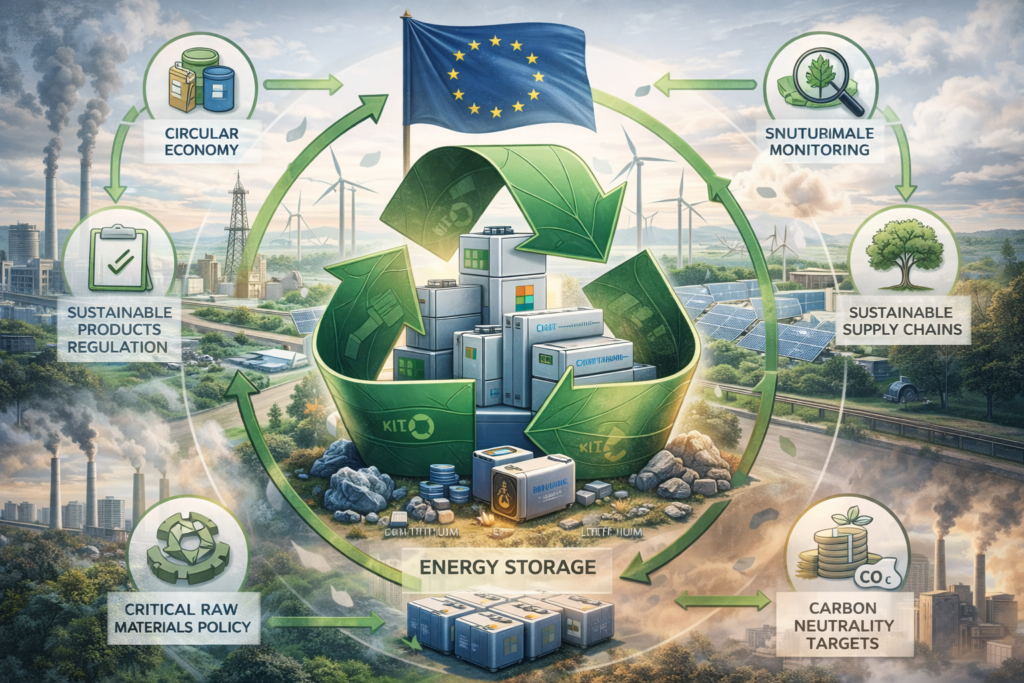
The EU Green Deal is not only about renewable energy. It is also about:
circular economy
sustainable products regulation
environmental monitoring
critical raw materials policy
sustainable supply chains
Energy storage technologies depend heavily on critical raw materials. That’s why the European Commission ties storage expansion to recycling, material recovery, and sustainability.
This connects to:
circular economy action plan
sustainable finance
EU deforestation regulation
carbon neutrality targets
Europe wants energy storage growth — but wants it to fit EU Green Deal sustainability requirements.
The Economic Layer: EU Green Deal, Energy Storage, and Competitiveness
Energy storage impacts:
electricity costs
industrial competitiveness
energy intensive industries
EU economy and economic sectors
job creation and innovation
Energy storage reduces peak electricity costs by shifting stored energy. It lowers the need for fossil fuels during peak hours. It reduces price spikes and grid instability.
That makes energy storage part of economic growth strategy, not just climate action.
What EU Countries and EU Member States Must Do
The Energy Storage Package will likely push EU member states to:
define national storage capacity plans
integrate storage into grid development
adopt consistent rules
support long-duration storage technologies
use sustainable investments and EIB funding tools
The European Parliament will play a role in shaping regulation. The European Investment Bank may support financing under sustainable Europe investment plan logic.
Challenges and Opportunities Under the EU Green Deal
Challenges
permitting delays
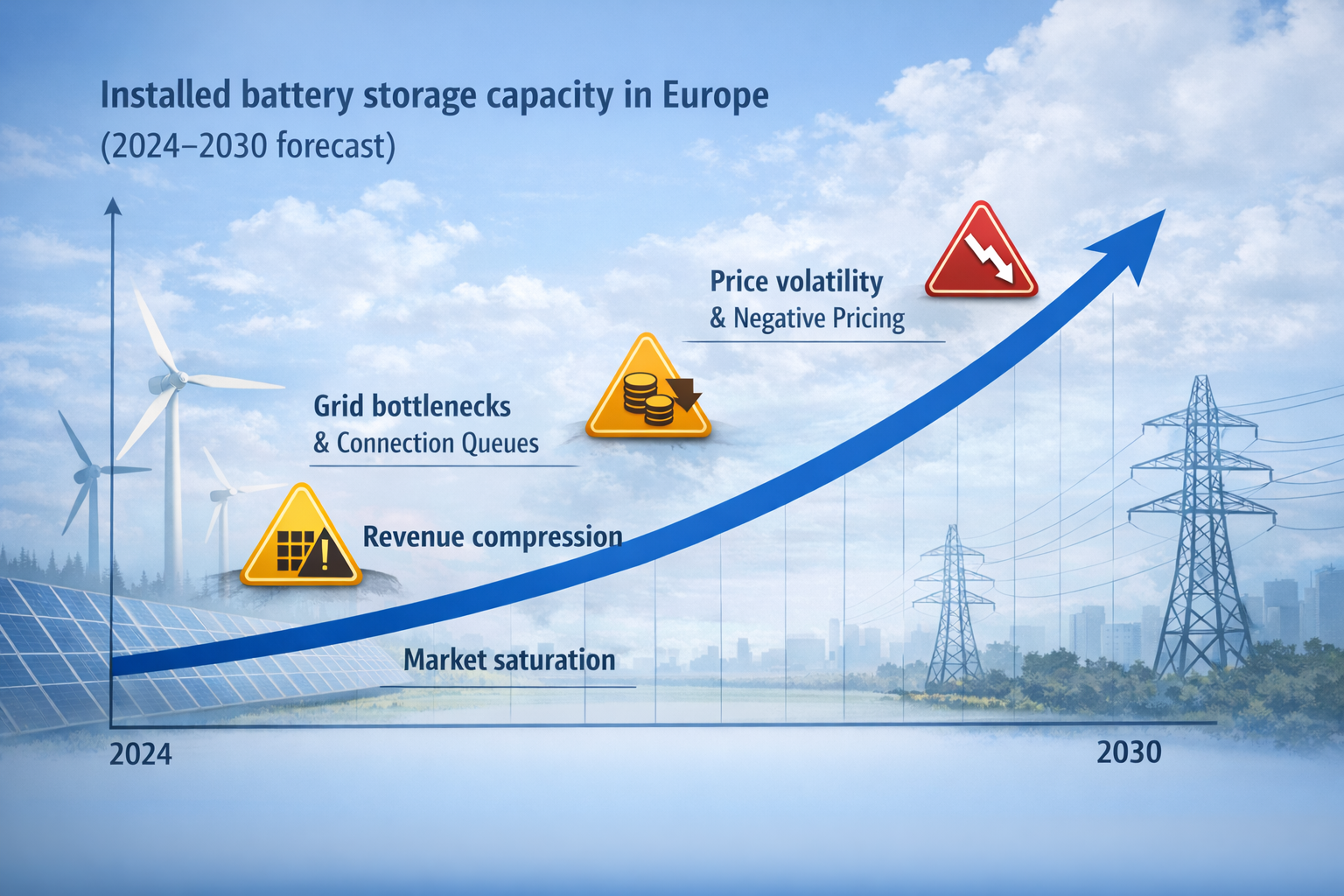
grid connection constraints
fragmented rules across member states
supply chain risks for critical raw materials
investment gaps for large-scale storage systems
Opportunities
rapid deployment of energy storage projects
improved energy efficiency
lower greenhouse gas emissions
reduced dependence on fossil fuels
stronger clean energy infrastructure
The EU Green Deal creates pressure, but also unlocks major infrastructure investment.
Conclusion: EU Green Deal Means Energy Storage First
The EU Green Deal is entering its infrastructure stage. The European Commission’s Energy Storage Package in Q4 2025 is a clear signal: energy storage is now the foundation of Europe’s energy system.
Europe’s climate neutrality ambitions depend on electricity storage, grid-scale storage systems, and deployment of energy storage technologies across EU countries.
Without energy storage:
renewable energy becomes volatility
grid reliability breaks
electricity costs rise
fossil fuels remain unavoidable
With energy storage:
renewable energy sources become dependable supply
greenhouse gas emissions fall
the energy system becomes resilient
Europe builds a sustainable, climate neutral economy
This is not “policy talk.” This is infrastructure reality.
Related Products from Aema ESS
Explore Aema ESS energy storage solutions for backup power, grid support, and renewable energy integration.
Featured systems:
Contact us today to receive a tailored offer for your upcoming project.