
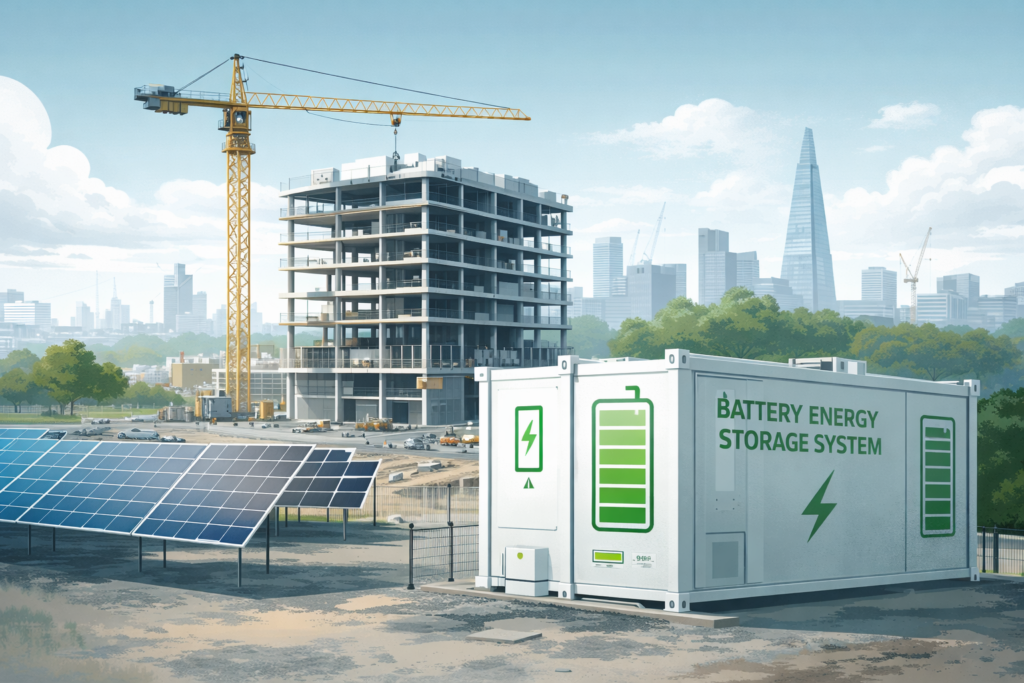
The UK construction sector is under pressure from rising electricity costs, stricter environmental rules, and ambitious targets for reducing carbon emissions. For every construction company in UK today, energy and sustainability are no longer “optional extras” – they define operational efficiency, project delivery, and long-term competitiveness.
The construction industry is a key driver of economic growth, powering large scale infrastructure projects and shaping the built environment across the UK. But it is also one of the most energy-intensive sectors, with high demand from facilities, heavy equipment, and time-critical site operations. That is why more construction companies are now investing in sustainable solutions to reduce carbon footprints, improve reliability, and protect margins.
This case shows how a leading UK construction firm made a strategic shift: replacing diesel-heavy temporary power and unstable grid reliance with modern energy systems that support sustainability, safety, and uninterrupted project performance.
Why Companies in the UK Must Take digital innovation Seriously
Energy is not just a line item in the budget. For a construction company in UK, energy reliability is the difference between staying on schedule or bleeding money on delays.
Construction operations require power for:
cranes, welding, and site equipment
temporary facilities, lighting, and security
offices, chargers, and IT
heating, ventilation, and workforce support
When grid instability hits, or when diesel fuel logistics fail, sites lose hours. That destroys efficiency and increases business expenses. That’s why more UK construction companies are moving toward resilient energy systems – with battery storage and hybrid power design.
Sustainability in Construction: Reducing Carbon Emissions and Environmental Impact
Sustainability has become a real economic factor in the construction sector. Clients now demand low-carbon delivery. Procurement scores reward sustainable development. Public projects increasingly require measurable reduction in carbon emissions.
For construction companies, sustainable environments are not just about the finished building, but also the process:
reducing emissions from site generators
improving energy efficiency
cutting idle fuel waste
lowering noise pollution
A strong focus on sustainability helps companies win tenders, attract partners, and position themselves as a driving force in the UK construction market.
From Traditional Site Power to Clean Energy in the New Built Environment
Many construction companies in the UK still use diesel generators as “standard” site equipment. But diesel is expensive, inefficient at partial load, and creates continuous emissions. More importantly, it makes sites dependent on fuel delivery schedules and creates operational risk.
A leading UK construction firm recently adopted a new power strategy:
integrate battery energy storage for peak demand coverage
reduce generator runtime dramatically
optimize electricity usage at the site level
support grid connection stability where possible
This approach supports both operational reliability and sustainability transformation.
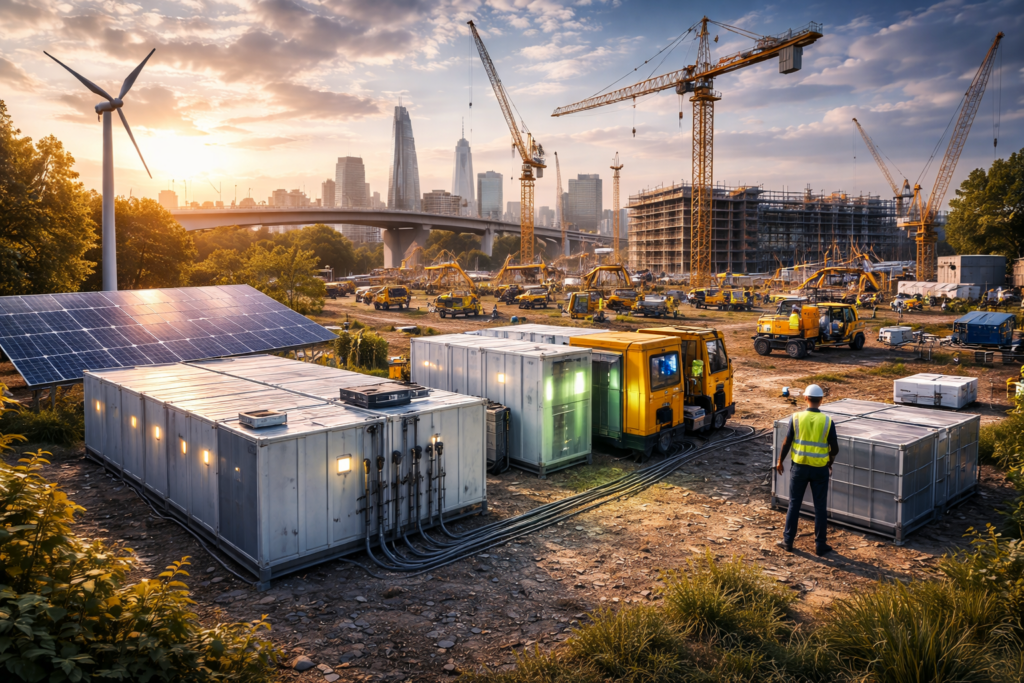
Innovation and Technical Excellence Driving Change
The construction sector is becoming more technical every year. Digital innovation is reshaping site management, energy planning, and equipment efficiency.
In this case, the company applied a technology-driven approach:
monitoring and optimization to enhance efficiency
planning power usage around demand curves
integrating flexible energy assets instead of fixed diesel supply
aligning energy strategy with ambitious targets
This kind of technical excellence is what separates modern market leaders from legacy operators.
Scale and Efficiency: Why Battery-Backed Power Wins in Construction
Unlike diesel generators, energy storage can scale. That matters because large projects have changing power profiles: heavy load peaks, idle phases, and bursts of demand.
Battery-supported power improves project performance by:
covering peak load without oversizing generators
supporting silent operation for night work or urban sites
stabilizing power quality for sensitive equipment
increasing reliability for uninterrupted operations
For facilities and sites across the UK, this makes the energy model more efficient, lower risk, and easier to manage.
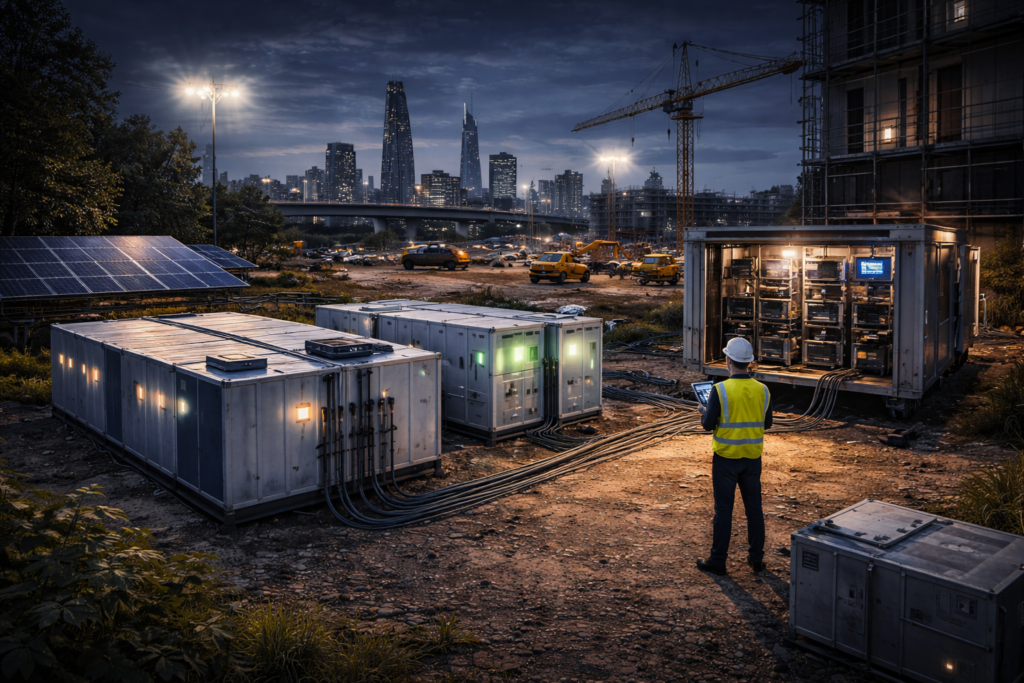
Collaboration: The New Model for Construction and Energy
No major construction firm operates alone. Collaboration is a defining trait of the modern construction industry – from supply chains to subcontractors and infrastructure stakeholders.
Energy transformation works best when construction companies collaborate with:
energy suppliers and grid operators
technical teams and engineers
sustainability partners
infrastructure stakeholders and communities
This creates stronger project outcomes, reduces environmental impact, and improves long-term resilience.
UK Construction Industry Leaders: Who’s Driving the Shift
The UK construction market has clear leaders who are well positioned for the future.
Examples include:
Balfour Beatty, known for large scale infrastructure projects and energy-aligned strategies
Morgan Sindall Group, recognized for sustainability focus and built environment transformation
These companies show where the sector is going: greener operations, higher efficiency, and smarter energy use.
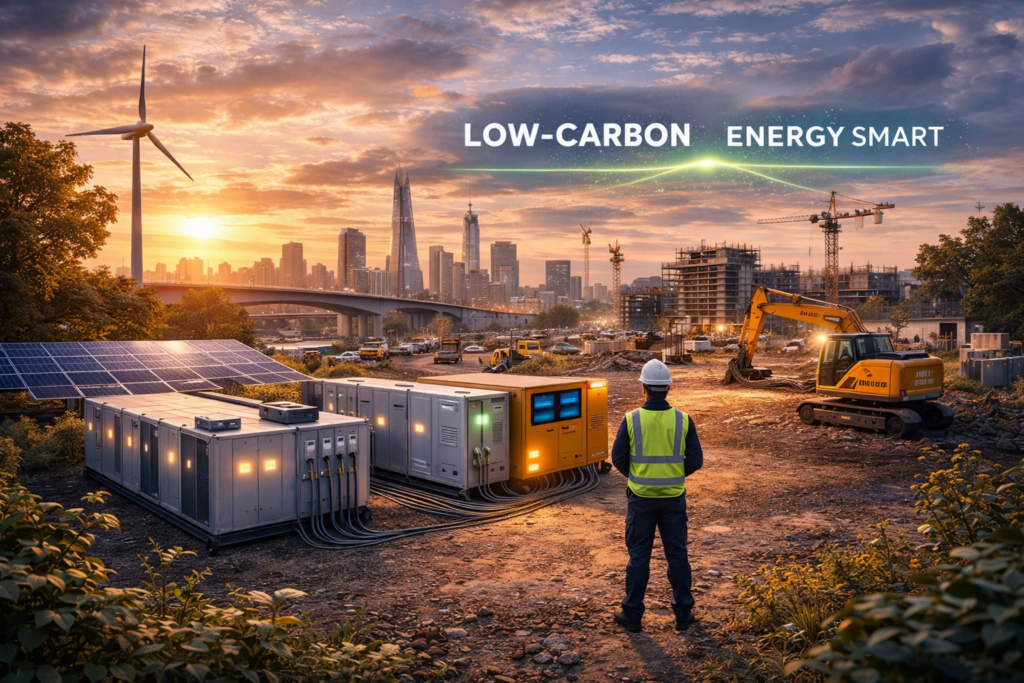
Conclusion: The Future of UK Construction Is Low-Carbon and Energy Smart
The future of the construction industry is defined by energy, sustainability, and efficiency.
For any construction company in UK, the mission is clear:
reduce carbon footprints
improve operations and safety
invest in innovation
meet demand with reliable electricity
deliver a lasting legacy through sustainable development
The construction sector will continue to face challenges – but the companies that lead will be those that treat energy as strategy, not cost.
Related Products from Aema ESS
Explore Aema ESS energy storage solutions for backup power, grid support, and renewable energy integration.
Featured systems:
Contact us today to receive a tailored offer for your upcoming project.